
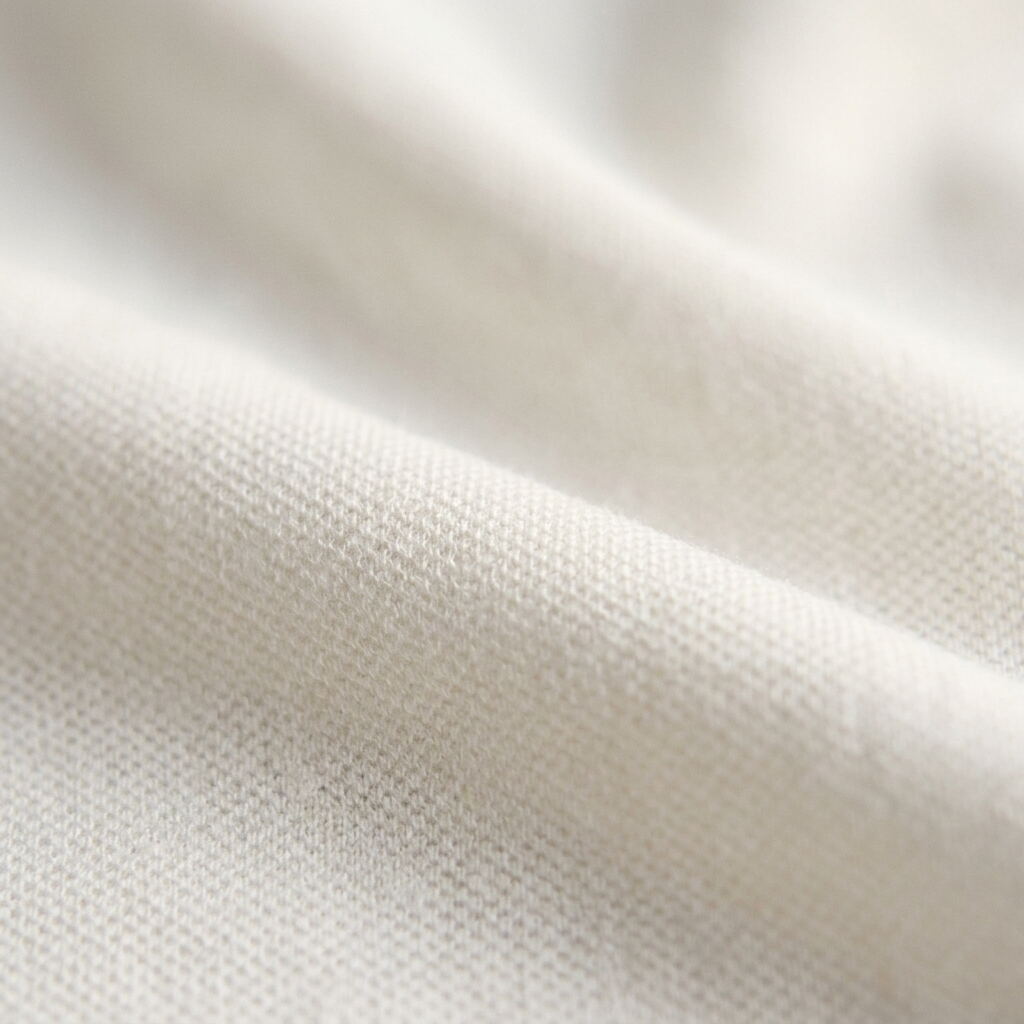
Cotton vs linen vs Tencel is a question about what you want a piece of clothing to do. All three are made from plant-based fibres, all three breathe better than most synthetics, and all three can last for years. But they feel, wrinkle and age very differently. Here is how they compare, and which one to reach for depending on the weather and the occasion.
The short version
| Cotton | Linen | Tencel lyocell | |
|---|---|---|---|
| Comes from | The fluffy fibre around cotton seeds | The stalks of the flax plant | Wood pulp, spun into a fibre |
| Feels | Soft, familiar, from light to dense | Crisp at first, softer with every wash | Smooth, cool, almost silky |
| In the heat | Good. Light weaves breathe well | Excellent. Airy and quick-drying | Very good. Absorbs moisture well |
| Warmth | Best of the three in knits and heavy weights | Least warm | Light to medium |
| Creasing | Moderate | A lot, and that’s part of the look | Low to moderate |
| Drape | Holds its shape | Stands away from the body | Falls softly and fluidly |
| Care | Easy. Cold wash, low or no heat | Cold wash, line dry | Cold, gentle wash, line dry |
| Best for | Tees, sweaters, corduroy, everyday basics | Summer trousers and shirts | Blends that need softness and drape |
Cotton: the everyday all-rounder
Cotton is the fibre most of us grew up wearing, and it covers the widest range. Woven light, it makes cool summer shirts. Knitted thick, it makes a warm sweater. Woven with raised ridges, it becomes corduroy.
Weight matters more with cotton than with almost any other fibre. A heavyweight jersey, like the 230gsm fabric of our Men’s Heavyweight Cotton T-Shirt, is dense enough that it doesn’t turn see-through and holds its shape after washing. A thin, cheap tee often twists at the seams and stretches at the collar within a few months.
Cotton is also the warmest of the three when it’s knitted. That’s why it works so well in cooler-weather pieces like the Cotton Crewneck Sweater and the Cable-Knit Quarter-Zip.
Choose cotton for: tees, knitwear, corduroy jackets and anything you want to throw in the wash without much thought.
Linen: the warm-weather specialist
Linen is one of the oldest textiles in the world, and it is still hard to beat on a hot day. The fibres are long and strong, the fabric is usually woven fairly openly, and it dries quickly. Flax also generally needs less water and fewer pesticides to grow than cotton.
The trade-off is creasing. Linen wrinkles easily and holds those wrinkles, which is part of its relaxed character. Blending linen with cotton softens it and tames the creasing a little, which is why the Men’s Straight Linen Pants use a crinkled linen-cotton blend designed to look good without ironing.
Choose linen for: summer trousers, holiday shirts and anything you’ll wear when it’s properly hot.
Tencel: the smooth one
Tencel is Lenzing’s brand of lyocell, a fibre made by dissolving wood pulp and spinning it into fine filaments. The result is smooth, cool to the touch and very good at absorbing moisture. It drapes more like silk than like cotton.
On its own, lyocell can feel too fluid for structured clothes. It really shines in blends. Mixed with linen, it softens linen’s stiffness and adds drape while keeping the airy feel. That’s the idea behind the Linen-Tencel Polo & Jogger Set. We cover how that blend wears over time in our linen-Tencel guide.
Lyocell needs a little care. Washing it hot or tumbling it hard can make the surface fuzzy, so a cold, gentle wash and a line dry are best.
Choose Tencel blends for: warm-weather sets, travel and anything you want to feel soft against the skin.
So which should you buy?
- For a hot summer: linen or a linen-Tencel blend. Linen if you like a crisp, textured look, the blend if you want something softer that creases less.
- For travel: a linen-Tencel set. It packs light, dries overnight and still looks put together.
- For everyday basics: heavyweight cotton. It’s the easiest to live with and the most forgiving to wash.
- For autumn and winter: cotton knits and corduroy. See our guide to sizing and layering a corduroy jacket.
One rule for all three
Heat is what shortens the life of natural fibres most. Washing cold, skipping high-heat tumble drying and drying on a line or flat will keep cotton, linen and Tencel looking right for far longer than any special detergent. Wear clothes more than once between washes when they’re not dirty, too. It’s better for the fabric and saves time.
Whichever fabric you choose, every EcoModa order comes with free 10-day returns on unworn items. Read the returns policy.